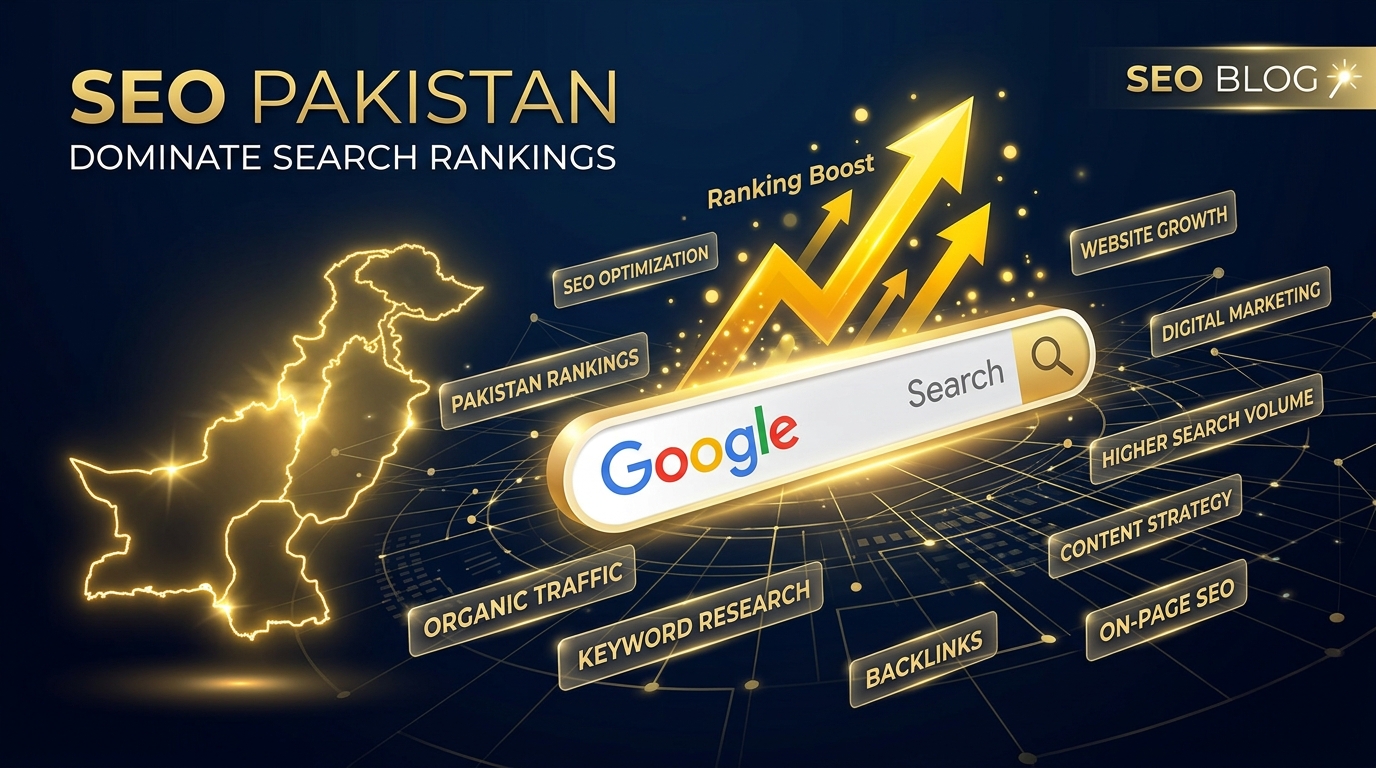
Shopify SEO for Pakistan-based stores is the most cost-effective way to drive consistent, high-quality traffic without paying per click. Unlike Facebook or TikTok ads where traffic stops the moment you stop spending, organic search traffic compounds over time. A product page that ranks on page one of Google can generate sales for years with zero ongoing ad cost. This guide covers every aspect of Shopify SEO specifically for Pakistani e-commerce businesses, from technical foundation to content strategy and local search optimization.
Google processes over 3.5 billion searches per day globally, and a significant and growing share comes from Pakistan. Pakistani consumers search for products, services, and brands directly on Google before making purchase decisions. If your Shopify store does not appear in those search results, you are invisible to a massive pool of potential customers actively looking for what you sell.
Why Shopify SEO Matters for Pakistani Sellers
Paid advertising costs in Pakistan have risen significantly. Meta Ads CPMs have increased by over 40 percent since 2024, and TikTok ad costs are climbing as more brands compete for space. SEO, on the other hand, offers a sustainable alternative. Here is why it is mission-critical for Shopify stores in Pakistan in 2026:
- Zero ongoing cost per click — Once you rank, every visitor is free. A top 3 ranking for a high-intent keyword like "buy embroidered kurti online Pakistan" can bring hundreds of free visitors per day.
- Compounding returns — SEO improves over time. Every blog post you publish, every product page you optimize, and every backlink you earn adds to your store's authority. Unlike ads, your SEO investment keeps paying dividends.
- Pakistani consumers trust Google — When a Pakistani buyer searches for a product and sees your store on the first page, it carries implicit trust. Organic listings are perceived as more credible than paid ads.
- Local search dominance — Searches with "in Karachi," "in Lahore," or "in Pakistan" have exploded. Optimizing for these local keywords gives you access to buyers who are ready to purchase.
Real example: A Karachi-based clothing store optimized their product pages for keywords like "unstitched lawn suits Karachi" and "Pakistani summer fabric 2026." Within 3 months, organic traffic from Google grew by 340% and became their largest sales channel, surpassing both Instagram and Facebook ads combined.
Technical Foundation — Setting Up Shopify for SEO Success
Before you can rank, you need a technically sound store. Shopify handles many technical SEO elements automatically, but there are several critical settings you must configure correctly:
Enable HTTPS and SSL
Shopify provides a free SSL certificate with every store. Ensure your store loads over HTTPS. Google treats HTTPS as a ranking signal, and Pakistani customers are increasingly security-conscious when entering payment information online.
Set Up a Custom Domain
Your Shopify store comes with a .myshopify.com URL by default. You must use a custom domain (yourstore.com or yourstore.pk). Google ranks custom domains significantly higher than subdomains of other sites. A .pk domain can also give you a local SEO boost for Pakistan-targeted searches.
Optimize Site Structure
Your store's navigation structure affects how Google crawls and understands your site. Use a logical hierarchy: Home > Collections > Products. Ensure every page is reachable within 3 clicks from the homepage. Use descriptive, keyword-rich collection titles rather than generic ones.
Submit Sitemap to Google Search Console
Shopify generates a sitemap.xml automatically at yourstore.com/sitemap.xml. Submit this to Google Search Console (free). This helps Google discover all your pages quickly. Also submit your RSS feed at yourstore.com/blogs/news.xml for your blog content. If you need help setting up your SEO foundation, contact ITSoft-Tech for expert Shopify SEO services.
Fix Crawl Errors
Use Google Search Console to monitor for 404 errors, broken links, and crawl issues. Shopify apps and theme changes can sometimes create broken pages. Fix these promptly because they hurt your site's overall crawl budget and ranking potential.
Keyword Research for Pakistani E-Commerce
Keyword research for Pakistan requires a different approach than generic SEO guides suggest. Pakistani search behavior has distinct characteristics that you must account for:
- Mixed language searches — Pakistani users frequently search in Roman Urdu or a mix of English and Urdu. For example, "kurti designs 2026 new collection" or "best biryani near me." Include these natural language variations in your keyword strategy.
- Price-sensitive queries — Pakistani shoppers often include price terms in searches like "under 2000," "cheap," "affordable price," or "best price in Pakistan." Optimizing for these can capture bottom-of-funnel buyers.
- City-specific searches — "In Karachi," "in Lahore," "in Islamabad" are extremely common modifiers. If you deliver to specific cities, create content and product pages targeting those locations.
- Brand comparison searches — Pakistani buyers frequently search for "Brand X vs Brand Y" or "Best [product] in Pakistan." These comparison searches present opportunities for blog content.
Use tools like Ubersuggest, Google Keyword Planner (free), or Ahrefs (paid) to find relevant keywords. Focus on keywords with monthly search volume between 100 and 1,000 — these are competitive enough to drive traffic but not so competitive that you cannot rank as a new store.
On-Page SEO — Optimizing Product Pages
Product pages are the most important pages on your Shopify store for SEO. They are what Google shows when users search for specific products. Here is how to optimize every element:
Product Title
Your product title is the most important SEO element. Include the product type, key attributes (color, size, material), and your target keyword. Example: "Hand-Embroidered Organza Kurti in Teal — Pakistani Lawn Suit 2026." Keep titles under 60 characters for optimal display in search results.
Product Description
Write unique, detailed descriptions for every product. Do not copy manufacturer descriptions — Google penalizes duplicate content. Include your target keyword naturally in the first paragraph. Use bullet points for features and benefits. Aim for at least 200 words per product description. Include material details, care instructions, sizing information, and what makes the product special.
Image Alt Text
Every product image should have descriptive alt text. Shopify allows you to add alt text to each image in the product editor. Alt text helps Google understand your images and can drive traffic through Google Image Search. Use format: "black embroidered khussa shoes Pakistan" rather than "IMG_1234.jpg."
Meta Title and Meta Description
Shopify generates these automatically, but you should override them with custom versions. The title tag should include your primary keyword near the beginning. Meta descriptions should be 150 to 160 characters, include the keyword, and contain a call to action like "Shop now with delivery across Pakistan."
URL Slug
Shopify generates product URLs from the product title by default. Edit the URL slug to be short and keyword-rich. Remove stop words like "a," "the," "and." Example: /products/embroidered-kurti-pakistan rather than /products/the-best-embroidered-kurti-in-pakistan-2026.
Product Reviews
Product reviews add fresh user-generated content to your pages, which Google rewards. Reviews also naturally include long-tail keywords that real customers use. Install a review app like Judge.me or Loox and actively solicit reviews after every purchase.
Collections and Category Page Optimization
Collection pages (your store's category pages) are often the second most important pages for SEO. They consolidate authority across multiple products and often rank for broader search terms.
- Descriptive collection titles — Use clear, keyword-focused titles like "Summer Lawn Collection 2026 — Unstitched Pakistani Suits" instead of "Summer Collection."
- Collection descriptions — Add a 100-150 word description at the top of each collection page. This helps Google understand what the collection is about and provides an opportunity to include relevant long-tail keywords.
- Internal linking — Link between related collections. If you have a "Formal Wear" collection and a "Wedding Collection" collection, link to one from the other. This distributes authority across your site.
- Filter and sort options — Enable Shopify's built-in filtering by size, color, price, and material. Google can index filtered URLs, which creates additional entry points for long-tail searches.
Content Marketing — Blogging for SEO
A blog is the most powerful SEO tool available to a Shopify store. Blog content lets you target informational keywords that product pages cannot cover. Here is a content strategy tailored for Pakistani e-commerce:
- Buying guides — "Complete Guide to Buying Lawn Suits Online in Pakistan" or "How to Choose the Right Fabric for Summer." These attract users early in their buying journey.
- Trend articles — "Top 10 Kurti Trends for 2026 in Pakistan" or "Wedding Season Fashion Trends Karachi." Seasonal content captures time-sensitive search traffic.
- How-to content — "How to Measure Your Dress Size at Home" or "How to Style a Shawl for Formal Events." These articles create trust and encourage social shares.
- Local guides — "Best Places to Buy Embroidered Shoes in Karachi" or "Where to Find Formal Wear in Saddar." If you have a physical presence, local content drives foot traffic.
Publish at least one blog post per week. Each post should be 800 to 1,500 words, include relevant images, and link to your product pages naturally within the content.
Technical Speed Optimization
Page speed is a confirmed Google ranking factor. It also directly affects conversion rates — a 1-second delay in page load time can reduce conversions by 7 percent. For Pakistani users who often browse on mid-range smartphones with 3G or 4G connections, speed optimization is even more critical.
- Compress images — Use apps like TinyIMG or Crush.pics to compress product images without quality loss. Target file sizes under 200KB per image.
- Use a fast theme — Shopify's Dawn theme loads in under 2 seconds by default. Avoid heavy premium themes with excessive animations and JavaScript.
- Limit apps — Each app you install adds code to your storefront. Keep your app count under 10. Audit installed apps quarterly and remove any you are not actively using.
- Enable lazy loading — Shopify's latest themes support lazy loading by default, which means images load only when users scroll to them. This dramatically improves initial page load time.
- Minimize code — Use Shopify's built-in CDN for asset delivery. Avoid adding custom CSS or JavaScript that is not essential. Every extra line of code affects load time.
Earning Backlinks — Off-Page SEO for Pakistani Stores
Backlinks remain one of Google's top 3 ranking signals. For a Pakistani Shopify store, building quality backlinks requires a targeted approach:
- Local business directories — List your store on Pakistani business directories like PakBiz, BusinessList.pk, and YellowPages.pk. While these are not high-authority, they create contextual local relevance.
- Guest posting — Write articles for Pakistani fashion blogs, lifestyle websites, and e-commerce publications. Offer valuable content in exchange for a backlink to your store. Focus on sites that already rank for keywords related to your products. For professional help, ITSoft-Tech's digital marketing services include complete SEO and link-building strategies for Shopify stores.
- Influencer collaborations — When Pakistani influencers mention your brand in blog posts or YouTube videos, ask for a backlink to your store. Even if the link is nofollow, it drives referral traffic.
- PR and news mentions — If you do something newsworthy (launching a new collection, opening a physical store, hiring local artisans), pitch it to Pakistani news outlets like Dawn, The Express Tribune, or local Karachi publications.
- Broken link building — Find broken links on Pakistani websites relevant to your niche, then suggest your product page as a replacement. This is time-consuming but highly effective for building quality links.
Local SEO — Getting Found in Karachi and Other Cities
If you have a physical store in Karachi or deliver within specific cities, local SEO is essential. Here is how to optimize your Shopify store for local search in Pakistan:
- Create location-specific landing pages — If you serve multiple cities, create a page for each: "Shop in Karachi," "Shop in Lahore," "Shop in Islamabad." Optimize each page with local landmarks, area names, and city-specific keywords.
- Add structured data (Schema) — Use LocalBusiness schema markup to tell Google your business name, address, phone number, and operating hours. Shopify apps like SEO Manager can add this automatically.
- Google Business Profile — Set up a Google Business Profile for your store. This is the most important local SEO factor. Include your shop address (if you have a physical location), business hours, photos, and respond to every review.
- Consistent NAP — Ensure your business Name, Address, and Phone number are identical across your website, Google Business Profile, and all directories. Inconsistent NAP data confuses Google and hurts local rankings.
- City-specific keywords in titles — Include city names in your product and collection titles where relevant. "Women's Winter Jackets in Karachi" will rank for local searches much better than "Women's Winter Jackets" alone.
Measuring and Monitoring Shopify SEO
SEO is not a set-it-and-forget-it activity. You need to monitor your progress and adjust your strategy based on data. Here are the tools and metrics to track:
- Google Search Console — Track your search impressions, clicks, average position, and click-through rate. Monitor for manual actions and crawl errors weekly.
- Google Analytics 4 — Track organic traffic, organic conversion rate, and organic revenue. Set up conversion tracking for purchases, add-to-cart, and WhatsApp clicks.
- Rank tracking — Use tools like Ubersuggest, AccuRanker, or SEMrush to track your keyword rankings. Focus on the top 20 keywords that drive the most revenue.
- Core Web Vitals — Monitor your store's Largest Contentful Paint (LCP), First Input Delay (FID), and Cumulative Layout Shift (CLS) in Google Search Console. These are direct ranking factors.
- Backlink monitoring — Use Ahrefs or Moz to track new and lost backlinks. If you lose an important backlink, try to recover it.
Set a monthly SEO review. Look at which pages are gaining or losing traffic, which keywords are improving or declining, and which content gaps your competitors are exploiting. SEO is an ongoing process, and stores that consistently invest in it build a durable competitive advantage. For a complete SEO audit of your Shopify store, message itsofttech.itst on WhatsApp today.
Common Shopify SEO Mistakes to Avoid
- Duplicate content — Using the same product descriptions from suppliers or manufacturers. Google penalizes duplicate content aggressively. Always write original descriptions.
- Ignoring mobile optimization — Over 75% of Shopify traffic in Pakistan comes from mobile. If your store does not render perfectly on phone screens, you will struggle to rank.
- Keyword stuffing — Repeating the same keyword unnaturally in titles, descriptions, and content. This hurts user experience and can trigger Google penalties. Write naturally.
- Neglecting blog content — Stores without blogs struggle to rank for informational keywords that drive top-of-funnel traffic. Blogging is not optional for serious SEO.
- Slow page speed — Every extra second of load time costs you rankings and sales. Speed optimization should be an ongoing priority, not a one-time fix.
- No structured data — Product schema, review schema, and breadcrumb schema help Google understand your store and display rich results in search. Install schema markup on every page.
The bottom line: Shopify SEO for Pakistan is not complicated, but it requires consistent effort. Every product page optimized, every blog post published, and every backlink earned compounds over time. The stores that start today will be the ones dominating search results a year from now.